Oil filter symptoms: technical signs and engine impact
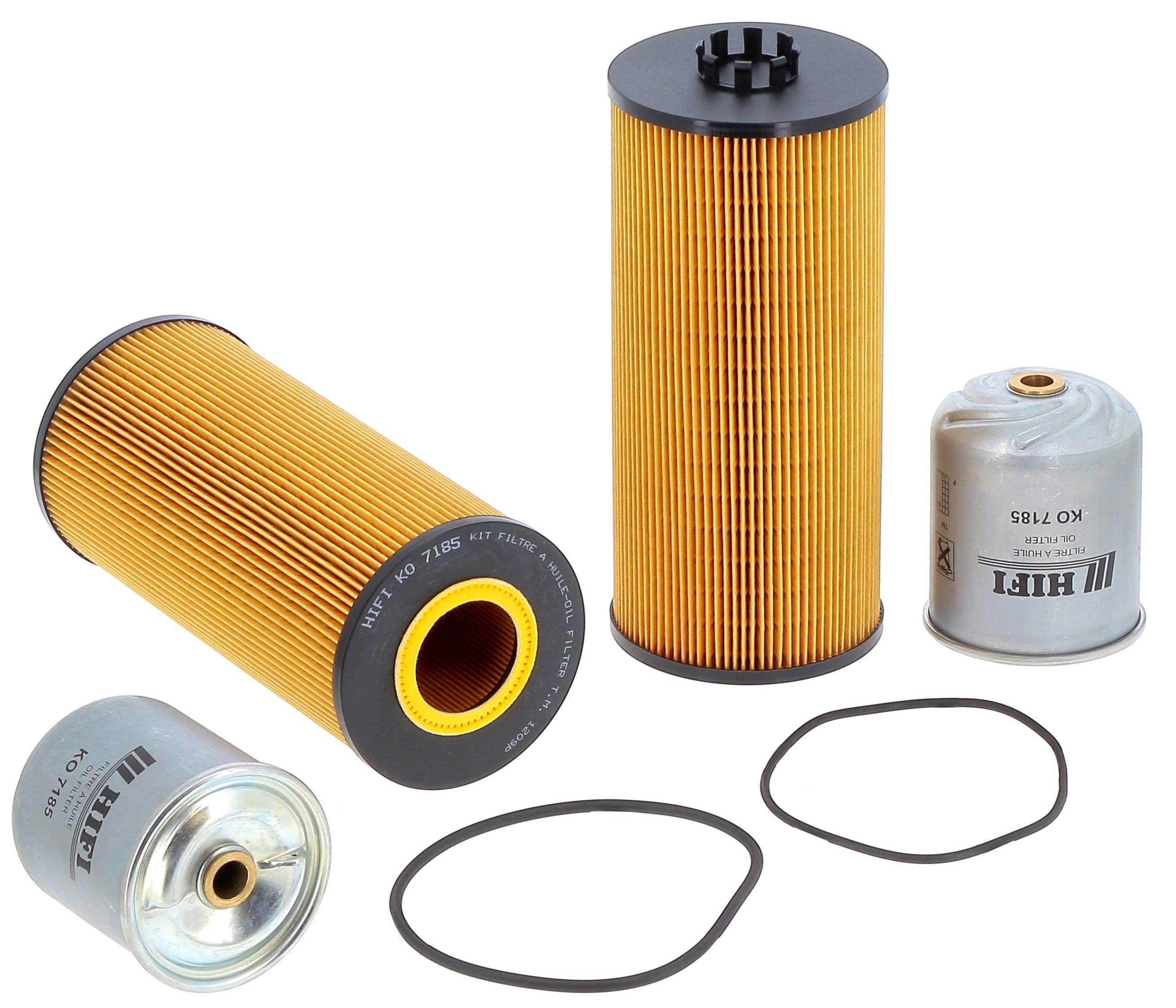
In summary: A failing oil filter compromises the lubrication circuit by either restricting flow or allowing contaminants to bypass the filtration media. Common oil filter symptoms include a drop in oil pressure, metallic knocking sounds from the crankshaft or valvetrain, and visible soot or metal shavings in the lubricant. Immediate replacement with high-specification components, such as the HIFI FILTER KO 7185, is necessary to prevent terminal engine wear or seizure.
How do you identify primary oil filter symptoms?
The oil filter is the primary defence against abrasive particles, carbon deposits, and metallic wear debris. When this component reaches its saturation point or suffers a structural failure, the engine displays several quantifiable symptoms. The most immediate sign is often a fluctuation in oil pressure. In modern internal combustion engines, a sensor monitors the pressure of the oil after it passes through the filter. If the media is clogged, the resistance to flow increases, leading to a noticeable drop in pressure on the gauge or the illumination of the oil warning light on the dashboard.
Another technical indicator is the presence of unusual mechanical noises. When the filter is obstructed, the flow rate to the upper cylinder head and camshafts is reduced. This lack of lubrication results in increased friction between the lifters, valves, and cams, producing a rhythmic ticking or tapping sound. In severe cases, where the oil cannot reach the main bearings, a deeper metallic thud or knock may be heard, signifying that the engine is nearing a catastrophic failure point.
What are the mechanical consequences of a clogged filter?
When the filtration media becomes fully saturated, the internal bypass valve (or relief valve) is forced open. This is a safety mechanism designed to prevent the engine from being completely starved of oil, but it comes at a high cost: it allows unfiltered oil to circulate through the engine. While the engine continues to run, the abrasive particles that should have been trapped by the filter are now pumped directly into the high-tolerance areas of the engine, such as the turbocharger bearings and piston rings.
Overheating is a secondary but frequent consequence of poor filtration. Oil serves two purposes: lubrication and thermal management. If the flow is restricted due to a blocked filter, the oil spends more time in the high-heat zones of the engine and less time being cooled in the sump or oil cooler. This causes the overall engine temperature to rise, which can lead to the thermal breakdown of the oil itself, further exacerbating the cycle of wear and clogging.
How do visual inspections reveal oil filter failure?
Technical diagnostics often require a visual assessment of both the filter housing and the oil's condition. If you observe oil leaking from the base of the filter, it may indicate a perished gasket or a deformed filter canister caused by high-pressure spikes. Using a dedicated HIFI FILTER LO K001 service kit ensures that all seals and components are replaced simultaneously, maintaining system integrity.
The appearance of the oil on the dipstick can also serve as a diagnostic tool. If the oil appears excessively dark, thick, or contains visible metallic flakes shortly after a change, the filter has likely failed to perform its task. In diesel engines, a clogged filter often leads to an increase in exhaust smoke. This occurs because the engine must work harder to overcome the internal friction and lack of efficiency caused by poor lubrication, leading to incomplete combustion and higher soot production.
Why does the bypass valve fail to protect the engine long-term?
The bypass valve is intended as a temporary measure, not a permanent solution for a neglected filter. In a standard full-flow system, once the pressure differential (Delta P) across the filter element exceeds a certain threshold—typically between 1.0 and 2.5 bar—the valve opens. This ensures the mechanical components do not seize instantly, but it introduces microscopic contaminants back into the system.
Prolonged operation in bypass mode causes accelerated wear on the journal bearings. These bearings rely on a thin film of oil to keep the metal surfaces apart. Even small particles, measured in microns, can breach this film and score the metal surfaces. Once the surface of a bearing is scored, the oil pressure will permanently drop because the clearance between the parts has increased beyond the manufacturer's specifications. This is why addressing oil filter symptoms immediately is far more cost-effective than an engine rebuild.
What role do high-quality components play in prevention?
To avoid the risks associated with premature clogging or structural failure, it is essential to use filters with a high Beta ratio and robust construction. Filters like the HIFI FILTER KO 7185 are engineered to handle high flow rates while maintaining high capture efficiency for particles as small as 10-20 microns. The quality of the synthetic or cellulose media within the filter determines how much contaminant it can hold before the bypass valve is triggered.
Furthermore, the structural integrity of the canister is vital. In heavy-duty or high-performance applications, the oil pump can generate significant pressure during cold starts. A low-quality filter may suffer from 'canister fatigue,' where the metal expands and contracts until it develops a hairline crack. Ensuring the use of professional-grade parts prevents these leaks and ensures that the filter can withstand the full service interval without degrading.
Frequently asked questions
Can a bad oil filter cause the engine to sputter?
Yes, indirectly. If the oil filter is severely clogged, the resulting friction and heat can cause the engine's electronic control unit (ECU) to reduce power output to protect the hardware. This can manifest as sluggish acceleration or a sputtering sensation as the engine struggles with internal resistance.
Will changing the oil filter fix low oil pressure?
If the low pressure is caused specifically by a restricted filter or a faulty bypass valve within the filter, then a replacement will restore normal pressure. However, if the low pressure is due to a worn oil pump or excessive bearing clearances, a new filter will not solve the underlying mechanical issue.
How often should I check for oil filter symptoms?
Visual inspections for leaks should be performed monthly. However, the filter itself should be replaced at every oil change interval, typically every 5,000 to 10,000 miles depending on the vehicle manufacturer and the type of oil used. For heavy-duty machinery, monitoring service hours is the standard practice.
What is the difference between a full-flow and a bypass filter?
A full-flow filter, such as the HIFI FILTER KO 7185, processes all the oil headed to the engine's moving parts. A bypass filter (not to be confused with a bypass valve) is a secondary system that filters a small percentage of the oil much more finely to remove even smaller contaminants, often used in large diesel engines to extend oil life.
Share