Hydraulic Filter Guide: Protecting Your Machinery System
Understanding the Role of a Hydraulic Filter in Modern Industry
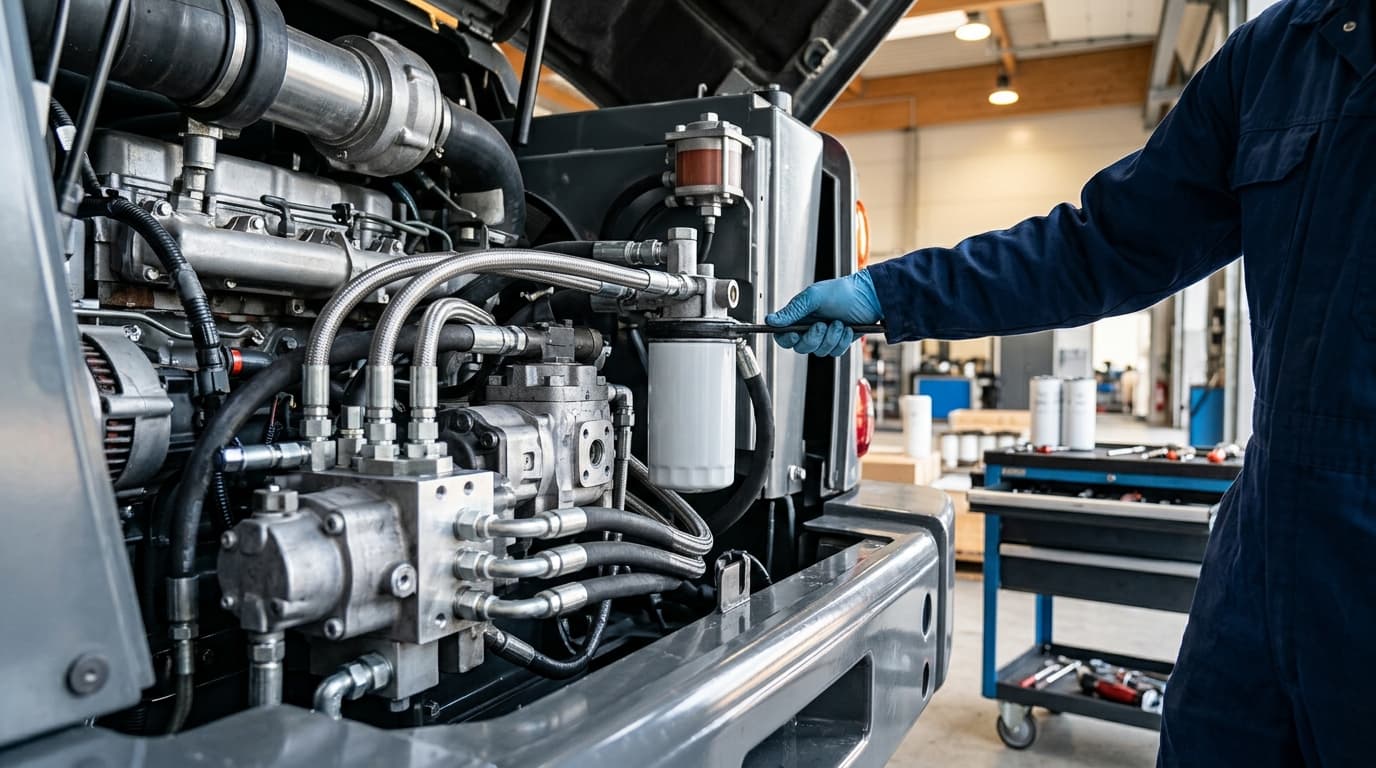
Every complex machine, from heavy-duty excavators to precision industrial presses, relies on a fluid power system known as a układ hydrauliczny. For these systems to function at peak efficiency, the hydraulic fluid must remain free of contaminants. This is where a high-quality hydraulic filter becomes the most critical component in your maintenance arsenal. In the demanding environments of maszyny budowlane (construction machinery) and agricultural sectors, even microscopic particles can lead to catastrophic component failure.
The primary purpose of a filtr hydrauliczny is to remove debris, metallic shavings, and environmental dust from the hydraulic oil. By doing so, it prevents abrasive wear on sensitive components such as pumps, valves, and cylinders. Without effective filtration, the lifespan of a machine is significantly reduced, leading to expensive downtime and repair costs. For operators and fleet managers, understanding the nuances of hydraulic filtration is not just about maintenance; it is about protecting a significant financial investment.
The Critical Importance of Fluid Cleanliness
Contamination is often referred to as the "silent killer" of hydraulic systems. It is estimated that up to 80% of hydraulic system failures are directly or indirectly caused by fluid contamination. These contaminants can enter the system through several avenues:
- Built-in contamination: Leftover debris from the manufacturing process, such as welding slag or metal burrs.
- Ingressed contamination: Dust and moisture entering through seals, breathers, or during fluid top-ups.
- Generated contamination: Wear particles created by the internal movement of components during normal operation.
- Maintenance-induced contamination: Particles introduced during the opening of the system for repairs or filter changes.
High-performance filtration ensures that these particles are captured before they can cause "chain-reaction" wear, where one particle creates several more as it moves through the high-pressure circuits. This is particularly vital for oil filters and hydraulic units that operate under extreme pressures.
Types of Hydraulic Filters and Their Locations
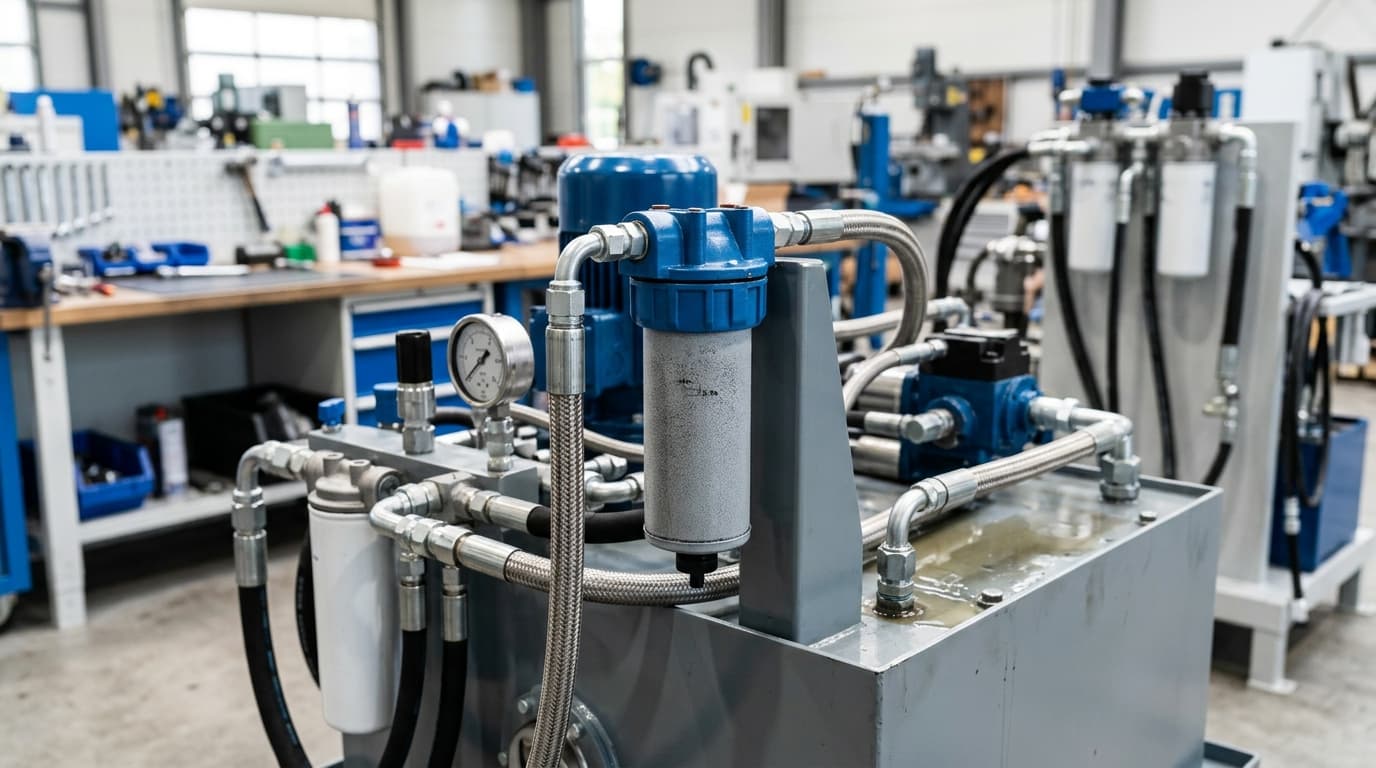
Not all filters in a hydraulic circuit perform the same task. Depending on their placement, they target different types of threats and offer varying levels of protection. Understanding where each filtr hydrauliczny is placed helps in diagnosing issues and planning maintenance.
Suction Filters and Strainers
Located on the inlet side of the pump, suction filters are designed to protect the pump from large particles found in the reservoir. While they prevent major damage, they must be chosen carefully; a filter that is too fine can cause pump cavitation, where the fluid cannot flow fast enough, leading to air bubbles and internal implosions that destroy the pump surfaces.
Pressure Side Filters
These are placed downstream from the pump. They are designed to handle the full system pressure and protect the most sensitive downstream components, like proportional valves and actuators. Pressure filters are typically the most robust and have the finest filtration ratings to ensure that only ultra-clean fluid reaches the machine's "brain."
Return Line Filters
As the fluid completes its circuit and returns to the reservoir, it passes through the return line filter. This is an excellent location for capturing wear particles generated by the work components (cylinders and motors) before they can settle in the tank. These filters are common in maszyny budowlane due to their ease of service and cost-effectiveness.
Pilot Line Filters
In many advanced machines, a small portion of the flow is diverted to control systems (pilot circuits). Pilot filters ensure that the small orifices in control valves do not become clogged, which would lead to sluggish or unresponsive machine controls.
Bypass or Kidney Loop Filters
These systems operate independently of the main hydraulic circuit. They pull fluid from the reservoir, pass it through a high-efficiency filter, and return it to the tank. This continuous "polishing" of the oil is often used in industrial stationary machinery to maintain extremely high cleanliness levels.
Technical Specifications: How to Choose the Right Filter
Selecting a hydraulic filter requires more than just matching the thread size. Technical specifications define how well a filter will perform under specific conditions. When browsing the massive inventory at Filtry.org, consider the following parameters:
Micron Rating (Nominal vs. Absolute)
The micron rating indicates the size of particles the filter can capture. However, there is a difference between nominal and absolute ratings:
- Nominal Rating: An arbitrary micrometer value indicated by the manufacturer, often representing a 50% efficiency for that size.
- Absolute Rating: The diameter of the largest hard spherical particle that will pass through the filter under specified test conditions. For critical systems, always look for absolute-rated filters.
Beta Ratio (β)
The Beta Ratio is the most accurate way to measure filter efficiency. It compares the number of particles of a certain size before the filter to the number after the filter. For example, a Beta Ratio of 200 (βx = 200) means that for every 200 particles entering, only one passes through, representing 99.5% efficiency.
Flow Rate and Pressure Drop
Every filter creates a resistance to flow, known as pressure drop (Delta P). As the filter becomes clogged, the pressure drop increases. It is vital to select a filter that can handle the maximum flow rate of the system without triggering the bypass valve prematurely. If the bypass valve opens, unfiltered oil will circulate through your układ hydrauliczny, defeating the purpose of the filter.
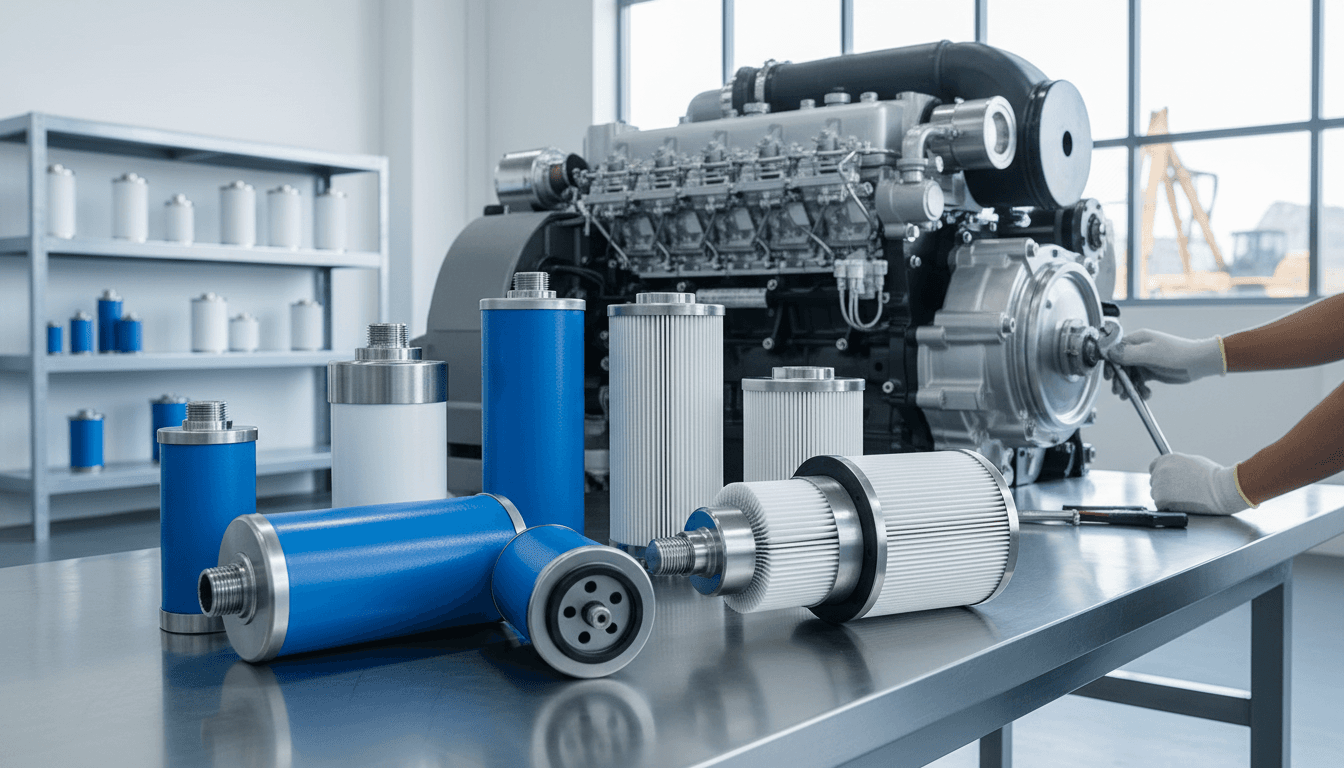
Media Material
The material of the filter element dictates its dirt-holding capacity and chemical compatibility:
- Cellulose (Paper): Common and inexpensive, suitable for basic filtration but sensitive to water.
- Synthetic (Microglass): Offers much higher efficiency and dirt-holding capacity. The fibres are smaller and more uniform, providing better flow and protection.
- Metal Mesh: Usually made of stainless steel, these are cleanable and used for coarse suction filtration or high-temperature applications.
Signs of a Failing or Clogged Hydraulic Filter
Knowing when to replace a filtr hydrauliczny is essential for preventing system failure. Operators should be trained to recognise the following warning signs:
Increased Noise (Cavitation)
If a suction filter is clogged, the pump may begin to "whine" or "growl." This is the sound of cavitation. If you hear this, the machine should be stopped immediately to prevent the pump from disintegrating internally.
Sluggish Operation
When the pressure drop across a filter becomes too high, the system may lose its responsiveness. If the cylinders move slower than usual or the hydraulic tools lack power, a clogged filter is a likely culprit.
Elevated Operating Temperatures
As a filter clogs, the pump has to work harder to push fluid through the restricted media. This extra work is converted into heat. If the hydraulic oil temperature is consistently higher than normal, check the condition of your filtration system alongside your cooling units.
Indicator Lights or Gauges
Most modern maszyny budowlane are equipped with differential pressure indicators. These visual or electronic sensors trigger when the pressure difference between the inlet and outlet of the filter exceeds a set limit. Do not ignore these alerts; they are designed to give you a window of time to change the filter before the bypass valve opens.
Maintenance Best Practices for Hydraulic Systems
Maintenance is not just about changing the hydraulic filter; it is about the way the change is performed. Contamination control is a discipline. Follow these steps to ensure a clean transition:
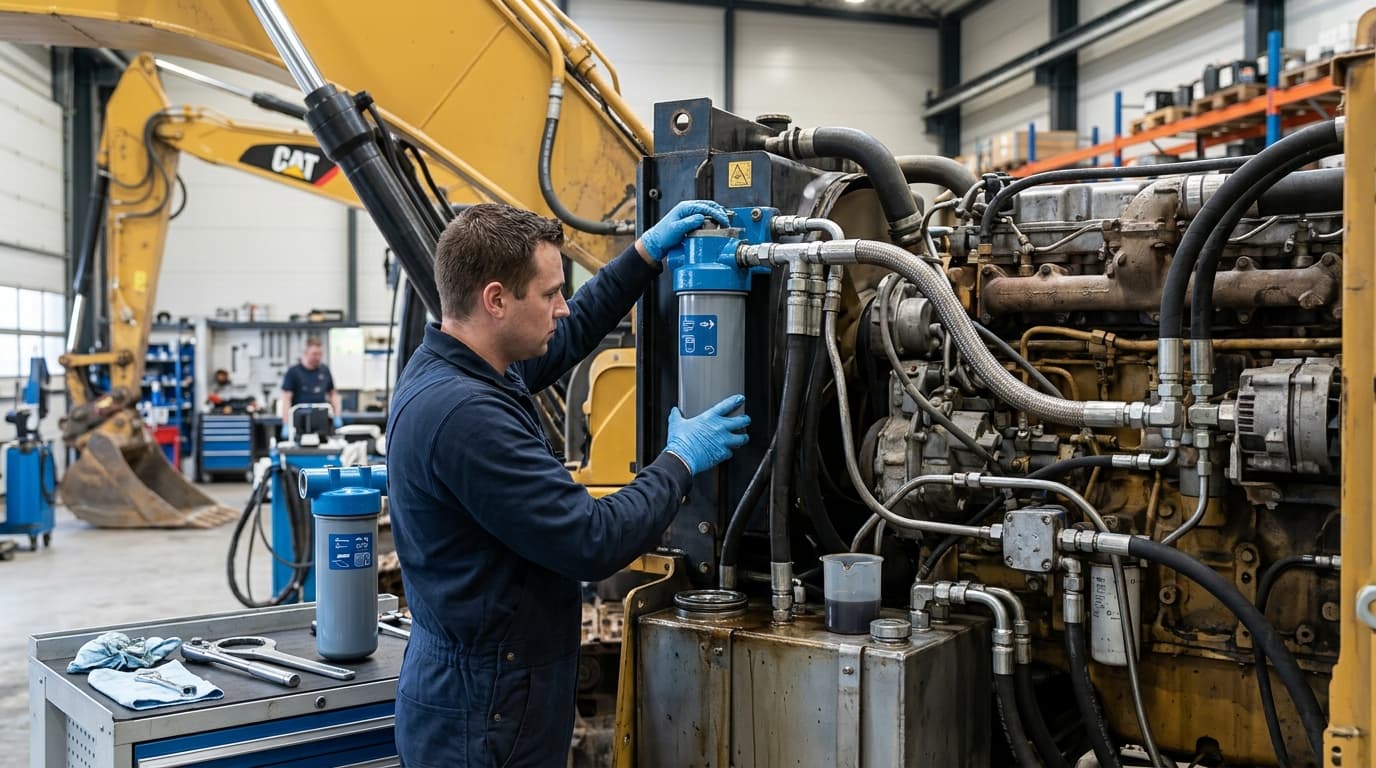
- Clean the surrounding area: Before opening any part of the hydraulic system, clean the filter housing and the area around it with a lint-free cloth and appropriate degreaser.
- Relieve system pressure: Ensure the machine is off and all stored pressure in accumulators or lines is safely discharged.
- Use the correct tools: Avoid using pipe wrenches that can crush filter canisters. Use the proper filter strap or socket.
- Inspect the old filter: Cutting open a used filter can provide a wealth of information. If you see large metal flakes, it is an early warning of a component (like a pump or motor) failing elsewhere in the system.
- Check the seals: Always ensure the old O-ring or gasket is removed. Lubricate the new seal with clean hydraulic oil before installation.
- Never pre-fill hydraulic filters: Unlike fuel filters, pre-filling a hydraulic filter can introduce unfiltered oil directly into the clean side of the system. It is better to let the system prime naturally unless the manufacturer specifically instructs otherwise.
The Economic Impact of Proper Filtration
While a high-quality filtr hydrauliczny may cost more than a budget alternative, the return on investment is significant. Consider the costs of a failed pump in a large excavator: the part itself is expensive, the labour to replace it is substantial, and the lost revenue from the machine being out of service can be thousands of pounds per day. Furthermore, when a pump fails, it often sends metal debris through the entire układ hydrauliczny, requiring a complete system flush and the replacement of valves and seals.
By maintaining strict filtration standards, you extend the intervals between major overhauls. Clean oil stays chemically stable for longer, reducing the frequency of oil changes. In the long run, investing in premium filtration is the most effective way to reduce the Total Cost of Ownership (TCO) for any fleet of maszyny budowlane.
Integration with Other Filtration Systems
A machine is a holistic environment. While the hydraulic system is vital, its longevity is also tied to other systems. For instance, air filters prevent dust from entering the engine, which indirectly protects the hydraulic system by keeping the overall operating environment cleaner. Similarly, maintaining clean fuel and engine oil ensures the entire machine runs at the designed parameters, preventing vibrations or overheating that could stress hydraulic connections.
Filtry.org provides a comprehensive range of solutions across all these categories, ensuring that every aspect of your machine—whether it is an agricultural tractor, a heavy crane, or an industrial press—is protected by the best filtration technology available.
Summary: Keeping Your Systems Flowing
Maintaining a układ hydrauliczny requires diligence and the right components. By selecting the correct hydraulic filter based on micron ratings, flow requirements, and application environment, you ensure the reliability of your equipment. Whether you are operating maszyny budowlane in a dusty quarry or managing a clean-room industrial facility, the principles remain the same: capture contaminants early and replace filters before they fail.
With over 300,000 products, Filtry.org stands as a leading distributor of filtration solutions across Europe. From suction strainers to high-pressure elements, having the right partner for your filtration needs is the first step toward mechanical excellence and operational longevity.
Share