Choosing Right Hydraulic Filters: Technical Criteria
In summary: Selecting the correct hydraulic filter involves a precise evaluation of system-specific variables, including the target ISO 4406 cleanliness code, the maximum operating pressure, and the specific flow characteristics of the hydraulic fluid. Engineers must prioritise the Beta ratio (efficiency) and the chemical compatibility of the filter media with the hydraulic oil to ensure long-term component protection and to prevent premature system failure caused by particulate contamination.
How do you determine the required ISO cleanliness level?
The foundation of choosing right hydraulic components begins with identifying the sensitivity of the system's most critical part. Components such as high-pressure piston pumps or servo valves require significantly cleaner fluid than simple gear pumps. The ISO 4406 standard provides a three-digit code representing the number of particles sized >4 µm, >6 µm, and >14 µm per millilitre of fluid. For example, a system with high-performance servo valves might require a cleanliness level of 16/14/11, whereas a standard industrial system might operate safely at 18/16/13.
Achieving these codes is not merely about selecting a fine micron rating. It requires a balanced approach where the filter element can capture contaminants without creating excessive back-pressure. If the filtration is too restrictive, the system may suffer from cavitation or increased energy consumption. If it is too coarse, the cumulative effect of silt-sized particles will lead to abrasive wear, shortening the life of cylinders and valves. Therefore, the technical specification of the filter must align with the manufacturer's recommendations for the specific hydraulic components in use.
What role does the Beta ratio play in filter efficiency?
When evaluating technical data sheets, the micron rating alone is often misleading. A "10-micron filter" could be nominal or absolute. To distinguish between these, engineers look at the Beta ratio (β), which is determined through Multi-Pass Testing (ISO 16889). The Beta ratio is the number of particles upstream of the filter divided by the number of particles downstream. For instance, a Beta ratio of 200 (βx = 200) means that for every 200 particles of size 'x' entering the filter, only one passes through, indicating 99.5% efficiency.
For critical applications, absolute filtration (typically defined as β ≥ 75 or β ≥ 200) is mandatory. High-efficiency elements, such as those found in the HIFI FILTER EL 10108 range, are designed to maintain high Beta ratios even as the pressure differential increases. Choosing a filter with a low Beta ratio may result in "particle shedding," where the filter itself releases captured contaminants back into the stream during pressure surges, defeating the purpose of the filtration system.
How do pressure differentials affect filter element integrity?
The differential pressure (Δp) is the difference in pressure between the inlet and the outlet of the filter. Every filter element has a "clean Δp" and a "terminal Δp." As the filter captures contaminants, the resistance to flow increases, and the differential pressure rises. Technical selection must account for the bypass valve cracking pressure. If the system's operational Δp reaches the bypass setting, the fluid will circumvent the filter media entirely to prevent the element from collapsing. While this protects the filter housing, it allows unfiltered oil to circulate, posing a significant risk to downstream components.
Furthermore, the physical construction of the element must withstand the maximum system pressure. In high-pressure lines, the filter housing and the element must be rated for the full system pressure, often exceeding 210 bar. For specialised fluid processing, components like the HIFI FILTER EB 23150 PP are engineered to handle specific flow velocities while maintaining structural integrity under varying thermal conditions. Fatigue resistance is also critical; in systems with frequent pressure pulsations, the filter media must be reinforced with metal mesh or synthetic layers to prevent pleat bunching or media migration.
Which technical factors influence suction vs. return line placement?
The location of the filter within the hydraulic circuit dictates its technical requirements. Suction filters are placed before the pump to protect it from large contaminants. However, they must have a very low pressure drop to prevent pump cavitation. Consequently, suction filters are typically coarser (usually 100 microns or more) and larger in size. Pressure line filters are located after the pump and must be built to withstand the highest system pressures. These are the primary filters for protecting sensitive valves and are usually the finest in the system.
Return line filters capture contaminants generated by the wear of cylinders and motors before the oil returns to the reservoir. While they do not have to withstand the full pump output pressure, they must handle high flow surges. Choosing right hydraulic placement often involves a combination: a suction strainer for the pump and a high-efficiency pressure or return line filter for overall system cleanliness. In specialized EDM (Electrical Discharge Machining) systems, precision is even more critical, requiring filters such as the HIFI FILTER EL 11001 to manage dielectric fluids at very specific flow rates and filtration levels.
How does fluid viscosity impact the choice of filtration media?
Viscosity is a measure of a fluid's resistance to flow and it changes significantly with temperature. Cold starts present a major challenge for hydraulic filters because the high viscosity of cold oil creates a high pressure drop across the media. This can prematurely trigger the bypass valve. When selecting a filter, the engineer must calculate the Δp based on the maximum viscosity at the lowest expected operating temperature. If the fluid is highly viscous, a larger filter housing or a different media type (such as glass fibre instead of cellulose) may be required to maintain acceptable flow rates.
Chemical compatibility is the second half of the fluid equation. While standard mineral oils are compatible with most NBR (Nitrile) seals and cellulose media, fire-resistant fluids or synthetic esters may require Viton seals and synthetic glass fibre media. Using incompatible materials can lead to seal swelling or media degradation, resulting in internal leaks or catastrophic filter failure. Always cross-reference the filter’s technical data with the specific fluid type used in your machinery.
Frequently asked questions
What is the difference between nominal and absolute filtration?
Nominal filtration is an arbitrary micron rating based on a weight percentage of contaminants captured, often around 50-80%. Absolute filtration is based on the Beta ratio and indicates a much higher efficiency (typically 98.7% or higher) for a specific particle size, providing more reliable protection for sensitive components.
Why is the bypass valve setting important when choosing a filter?
The bypass valve setting determines the point at which the filter will stop cleaning the oil to prevent the element from collapsing under pressure. It must be set higher than the normal operating pressure drop of the clean filter, but lower than the pressure that would damage the element or cause pump cavitation.
Can I use a hydraulic filter for EDM dielectric fluids?
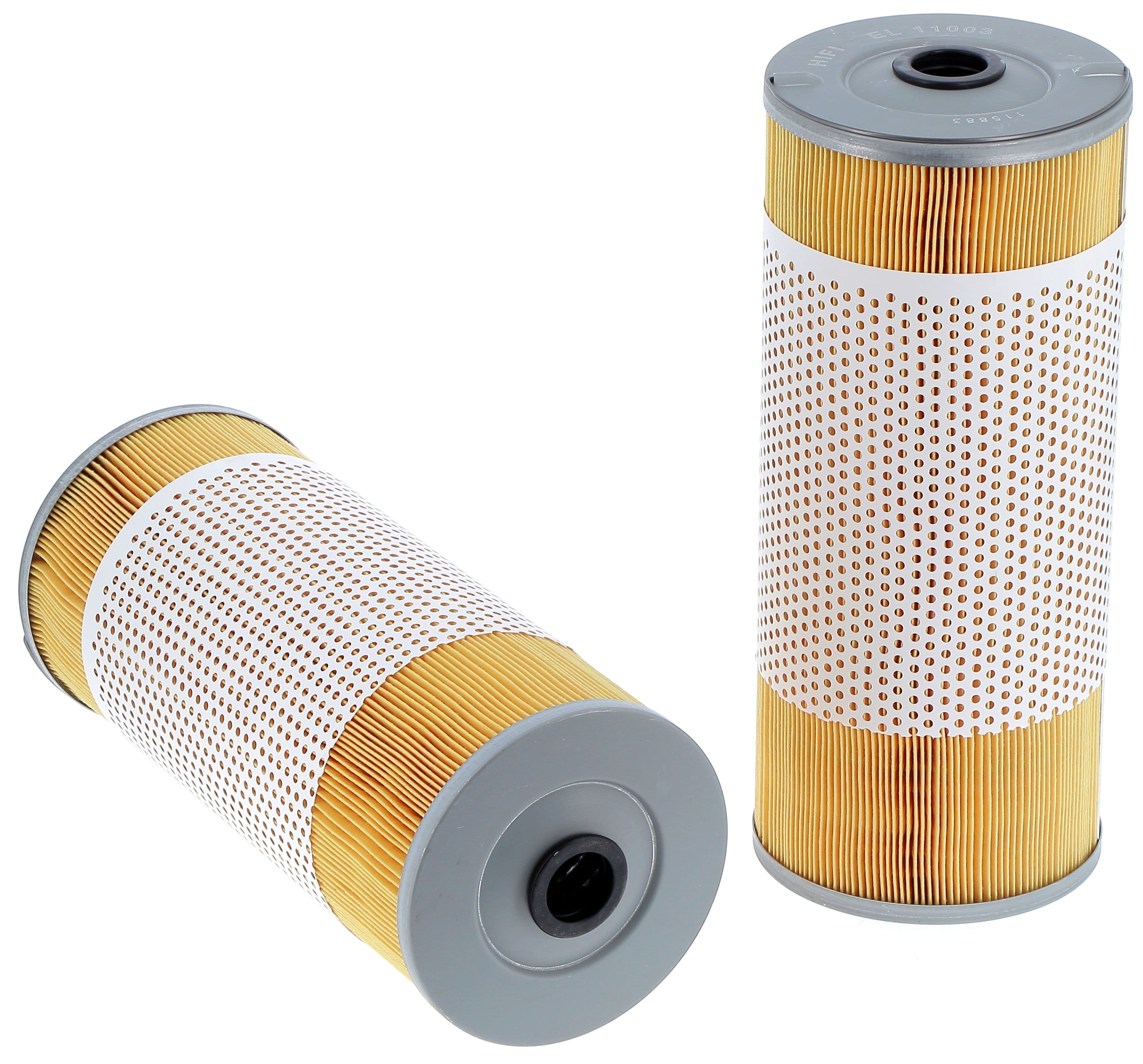
No, standard hydraulic filters are often not suited for the chemical properties and fine particulate demands of EDM processes. Specialist electro-erosion filters, such as the HIFI FILTER EL 11003, are specifically designed to handle the fine metallic dust and dielectric fluids used in those precision machines.
Share