Air filter replacement interval: A technical guide
In summary: The air filter replacement interval is a critical maintenance parameter dictated by engine design, operating environment, and the specific dust-holding capacity of the filtration media. While standard service schedules often suggest intervals between 15,000 and 30,000 kilometres, technical variables such as air quality and pressure drop across the filter element should ultimately dictate the timing of a replacement to prevent engine wear and fuel inefficiency.
What factors determine the air filter replacement interval?
The primary function of an air filter is to prevent abrasive particulates from entering the combustion chamber. The rate at which these particulates accumulate depends on several variables. In technical terms, the air filter replacement interval is not a fixed metric but a variable dictated by the ambient concentration of dust, pollen, and industrial soot. Vehicles operating in urban environments encounter high levels of carbonaceous soot, which can blind the filter media more rapidly than larger inorganic dust particles found in rural settings.
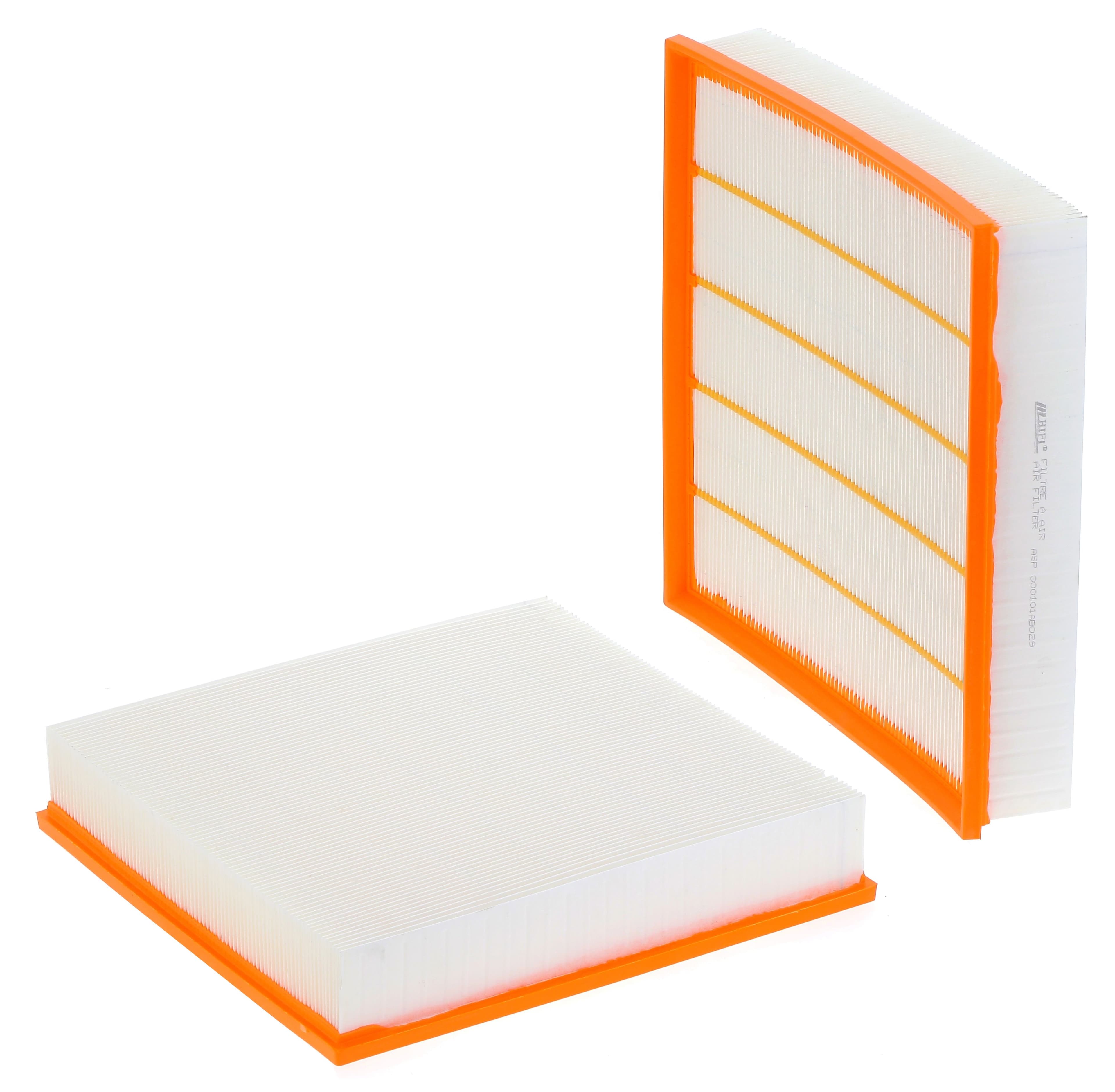
Filter media, such as those found in the HIFI FILTER ASP 000101AB029, are engineered with specific pore sizes to capture contaminants while maintaining airflow. As the filter captures debris, it undergoes a process called 'cake formation.' Initially, this layer of dust can actually improve filtration efficiency by narrowing the passages through which air must travel. However, once the dust cake reaches a critical thickness, the resistance to airflow—known as pressure drop—increases exponentially. This is the point at which the replacement interval has been reached.
How does a clogged air filter affect engine performance?
Modern internal combustion engines rely on a precise mass of air to calculate fuel injection via the Mass Air Flow (MAF) sensor. When an air filter exceeds its optimal replacement interval, the restriction in the intake tract causes the engine to work harder to draw in oxygen. This leads to a higher vacuum in the intake manifold, which can pull oil vapours through the crankcase ventilation system, resulting in carbon deposits on the intake valves.
Furthermore, a restricted filter causes a drop in volumetric efficiency. In naturally aspirated engines, this manifests as a noticeable loss of torque at high RPMs. In turbocharged engines, the turbocharger must spin faster to compensate for the intake restriction, which increases the temperature of the intake charge and places additional thermal stress on the turbo bearings and the intercooler. Utilising high-quality components like the HIFI FILTER ASP 000201AA006 ensures that the pressure drop remains within the manufacturer's specified tolerances for the duration of the service life.
How do environmental conditions impact service life?
Operating conditions are the most significant variable in determining the actual air filter replacement timing. In heavy-duty or off-road applications, a filter may reach its maximum dust-holding capacity in less than 5,000 kilometres. Conversely, a vehicle used primarily for long-distance motorway driving in a clean environment may safely exceed 30,000 kilometres on a single element.
It is important to note that seasonal changes also play a role. During spring and summer, high concentrations of pollen and organic debris can quickly saturate the outer layers of the filter media. In winter, moisture and road salt aerosols can contribute to the degradation of the paper fibres in standard cellulose filters, potentially leading to media rupture. For this reason, many technical experts recommend a visual inspection every 10,000 kilometres, regardless of the official service schedule.
What are the risks of exceeding the replacement interval?
Neglecting the air filter replacement interval poses several long-term risks to the powertrain. The most immediate threat is 'dusting' the engine. This occurs when a filter becomes so restricted that the vacuum pressure causes the filter media to deform or tear, or causes the perimeter seal to fail. When this happens, unfiltered air bypasses the element, allowing abrasive silicates to enter the cylinders. These particles act as a grinding paste, rapidly wearing down piston rings and cylinder liners, leading to a loss of compression and increased oil consumption.
Additionally, a saturated filter can lead to 'rich' combustion cycles. Although modern ECU systems can adjust fuel trim to compensate for reduced airflow, there is a limit to this adjustment. Persistent rich running conditions lead to incomplete combustion, which fouls spark plugs and accelerates the degradation of the catalytic converter or Diesel Particulate Filter (DPF). Replacing the filter with a precision-engineered unit, such as the HIFI FILTER ASP 000201AG006, is a cost-effective preventive measure against these expensive failures.
How to select the correct replacement component?
When the air filter replacement interval is reached, selecting a component that meets or exceeds Original Equipment (OE) specifications is vital. The technical specifications to look for include the micron rating, the total surface area of the pleated media, and the integrity of the polyurethane or rubber seals. A filter with insufficient surface area will have a shorter service life and a higher initial pressure drop, effectively shortening the next replacement interval.
Professional technicians often prefer HIFI FILTER products due to their rigorous testing against ISO 5011 standards, which measure both capacity and efficiency. Whether using the HIFI FILTER ASP 000204AA011 or the HIFI FILTER ASP 000205AA011, ensuring the seal fits perfectly within the airbox is essential to prevent unfiltered air from bypassing the media. A poorly fitting filter can be just as detrimental to an engine as a clogged one.
Frequently asked questions
Can I clean my air filter instead of replacing it?
Standard paper or cellulose air filters are designed for single use. Attempting to clean them with compressed air can enlarge the pores in the media or cause micro-tears, significantly reducing filtration efficiency. Only specialised cotton-gauze or foam filters designed for cleaning should be serviced; all others must be replaced.
Does a dirty air filter always trigger a dashboard warning light?
Not necessarily. Most modern vehicles do not have a dedicated sensor for air filter restriction. While a severely clogged filter might eventually trigger a 'Check Engine' light due to mass airflow or fuel trim errors, significant performance degradation and engine wear can occur long before a diagnostic code is generated.
How does the air filter replacement interval change for hybrid vehicles?
In hybrid vehicles, the internal combustion engine (ICE) runs for fewer hours compared to a standard vehicle over the same distance. However, the replacement interval should still be monitored based on time as well as mileage, as the filter media can degrade due to moisture and environmental pollutants even when the engine is not running.
What is the visual indicator of a spent air filter?
A spent filter typically appears grey or black due to accumulated particulates. If you hold the filter up to a strong light source and no light passes through the pleats, the filter is likely saturated. However, visual inspection is not always foolproof, as sub-micron particles can block the media without significantly changing its colour.
Is it necessary to replace the air filter more often in high-pollen areas?
Yes. Organic matter like pollen and seeds can be particularly problematic because they are larger than dust particles and can quickly bridge the gaps between pleats, reducing the effective surface area of the filter. In such environments, shortening the replacement interval by 25-50% is a prudent technical decision.
Share